UAE Infrastructure & Mobility
Al Maktoum Airport's Dh68 Billion Expansion Is Creating a New Passenger Transport Market in Dubai South
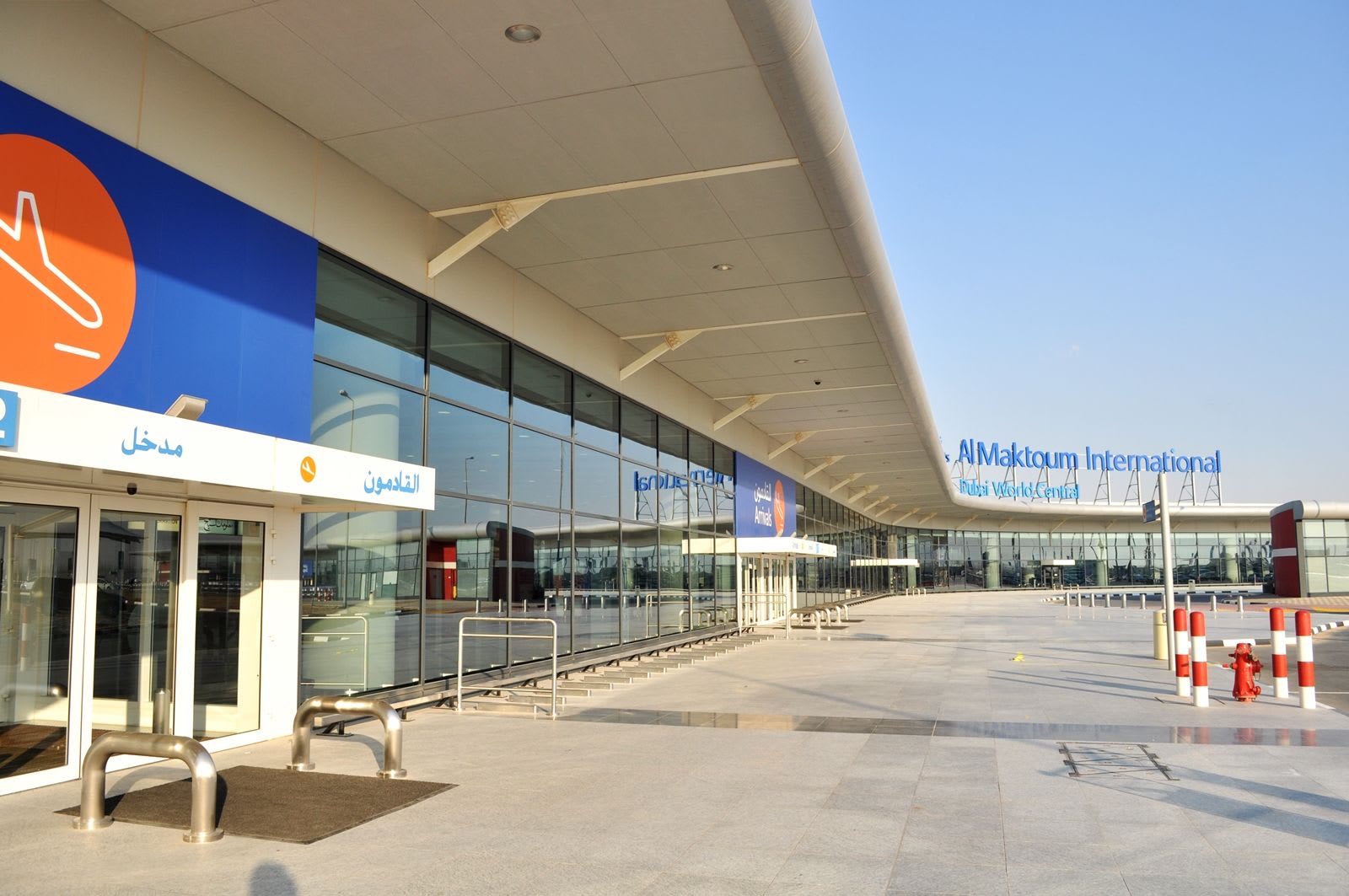
Dubai Airports has now committed Dh68 billion to building out Al Maktoum International Airport, and most of the coverage so far has focused on runways, gates, and eventual passenger capacity. That framing misses the part that actually matters to a passenger transport company right now. A construction program this large does not wait for its opening day to start generating transport demand. It starts generating demand the moment contractors mobilize, and it keeps generating a different kind of demand for years after the first flight lands. If you run corporate, staff, or group transport anywhere near Dubai South, this is worth fifteen minutes of your attention today, not once the terminal opens.
The numbers that just became real
Dubai Airports CEO Paul Griffiths confirmed in August 2026 that Dh13 billion in contracts had already been awarded in 2025, with a further Dh55 billion planned by the end of 2026, bringing the total committed spend to Dh68 billion. That is not a masterplan figure or an aspirational target. It is money already moving through construction contracts, which means it is already translating into mobilized workforces, site offices, and logistics operations across Dubai South.
The stated targets for what all that money buys are ambitious even by Dubai's standards. A second runway is targeted for completion by the end of 2027. Phase one of the wider build is meant to give the airport capacity for 150 million passengers a year by 2032, with Dubai Airports planning to move all DXB operations to Al Maktoum by that same year. The full, eventual build targets 260 million passengers annually, roughly 400 gates, and five parallel runways, alongside 12 million tonnes of annual cargo capacity. Whatever your view on how quickly any of that lands, the direction is unambiguous. Dubai is building its next major aviation hub in Dubai South, not adding a wing to an existing one.
The part almost nobody is talking about
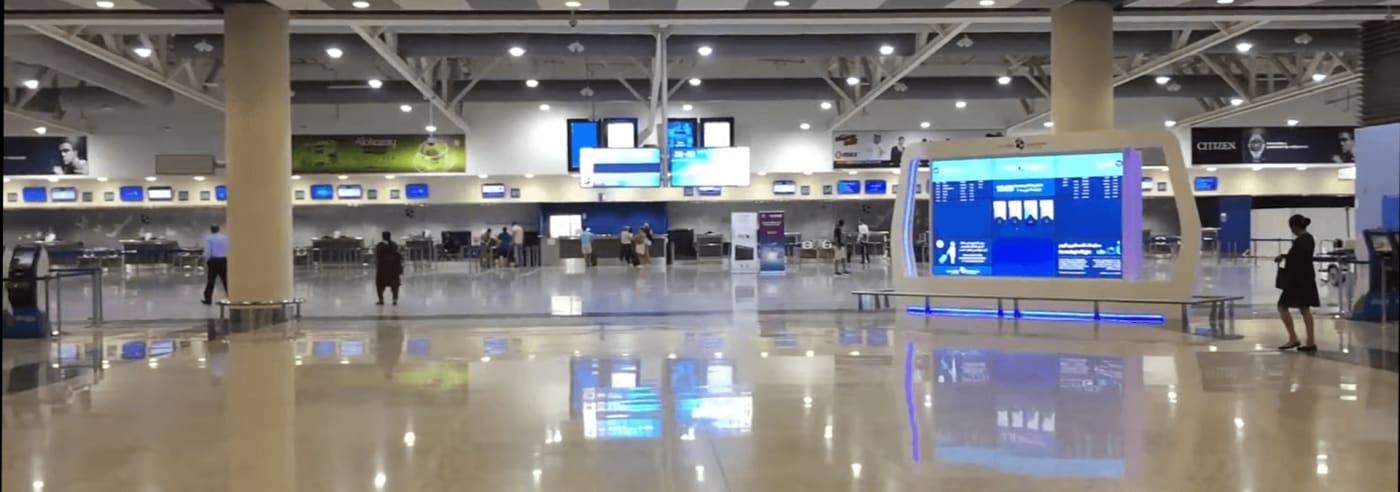
Buried in the trade press coverage of this expansion is a detail that matters more to a transport operator than any runway count. Dubai Airports has planned a 14 station Automated People Mover loop at the new airport, and it is being built to integrate directly with Etihad Rail and a dedicated Dubai Metro Blue Line extension. The design and build contract for that people mover has already gone to a consortium involving Mitsubishi Heavy Industries.
Read that again and think about what it means operationally. This is not an airport being built with a taxi rank and a bus stop as an afterthought. It is a mobility hub being designed from the ground up around multiple connected transport modes, feeding passengers, staff, and cargo workers between rail, metro, and the terminal itself. Whoever designs the ground transport ecosystem around that hub is not competing against the airport's own transport plan. They are filling in everything the plan does not cover, which is most of the actual passenger transport most people will need.
Why framing this as an airport transfer opportunity undersells it
It is tempting to read all of this and think mainly about airport transfers, the classic passenger transport product of picking travelers up from arrivals and dropping them at hotels. That market will grow, but it is the smallest and most competitive part of what is actually opening up.
The much larger opportunity sits with the people who will be working in and around Dubai South long before a single passenger walks through the new terminal. A construction program at this scale requires thousands of contractors, engineers, and site workers who need daily transport to and from the build site, often across shift patterns that do not match public transport schedules. Once operations phases begin, airlines, ground handlers, catering companies, security contractors, and retail and hospitality operators all need to staff a growing campus, and every one of those employers has the same unglamorous problem: getting employees to work reliably, on time, every single day.
This is recurring, contracted, high volume transport demand, and it is exactly the kind of business a passenger transport company builds a stable revenue base on. It does not depend on tourist arrivals or seasonal travel patterns. It depends on a workforce showing up for a shift, which happens every single day regardless of flight schedules.
The window that is open right now
Here is the part that should create urgency rather than just interest. None of this workforce transport demand waits politely for the airport to open before it appears. Construction contractors are mobilizing today, against a Dh68 billion program that is already partway through 2026. The operators who start building relationships with contractors, ground handling companies, and hospitality groups now, while the site is still being built, are the ones who will already be the trusted, known transport partner by the time operational staffing ramps up.
Wait until the terminal opens to start those conversations and you are competing from behind against operators who have spent two or three years quietly proving themselves on the construction phase contracts. That head start compounds. A transport company that already understands a client's shift patterns, site access points, and passenger volumes has a real advantage over a new bidder trying to learn all of that from scratch during a competitive tender.
What to verify before you act on this
It is worth being precise about what is confirmed here and what is not. The Dh68 billion figure, the contract award numbers, the runway and passenger capacity targets, and the automated people mover contract are all attributable to Dubai Airports leadership and consistent trade press reporting. They are solid ground to plan against.
Some of the widely repeated figures about Dubai South itself, particularly claims of 500,000 eventual jobs and a resident population eventually exceeding one million, trace back mainly to real estate marketing material rather than an official Dubai South or government publication that could be independently confirmed at the time of writing. Treat those specific numbers with appropriate caution rather than building a business case entirely around them. The underlying trend, a genuinely large and growing employment and residential district forming around the airport, is well supported even without leaning on unverified totals.
What construction phase transport actually looks like
It helps to be concrete about what construction phase demand really involves, because it looks different from the transport contracts most operators are used to bidding for. A project moving Dh55 billion through contracts in a single year involves multiple concurrent work sites, each running its own shift pattern, often starting well before dawn to avoid the worst of the daytime heat and finishing in a second shift that runs into the evening. Workers are frequently housed in labor accommodation clusters some distance from the actual site, which means every shift change requires a coordinated movement of large numbers of people across a fixed route, at a fixed time, with very little tolerance for delay.
That is a fundamentally different operational problem than airport transfers, where every trip is a one off with a different pickup time and destination. Construction workforce transport rewards an operator who can run the same route reliably, day after day, with vehicles sized correctly for the headcount and drivers who know the site access points well enough to avoid losing time at security checkpoints. It is unglamorous work, and that is exactly why it tends to go to whichever operator already has a relationship with the main contractor rather than being put out to a fresh competitive tender every time.
Sizing the opportunity without guessing
It is worth trying to put rough numbers on this rather than treating it as a vague sense that something big is happening nearby. A construction program of this scale typically sustains a workforce in the low tens of thousands across its peak years, spread across civil works, structural construction, and the specialized fit out trades that follow. Even a conservative assumption that a meaningful share of that workforce needs organized daily transport, rather than arranging their own way to site, points to a multi year contract opportunity measured in hundreds of vehicles worth of daily capacity across the build period.
Once the airport moves into operations, the profile shifts again. Ground handling alone at an airport targeting hundreds of millions of annual passengers requires a workforce that runs around the clock in shifts, since aircraft do not stop moving overnight. Add catering, security, retail, hospitality, and cargo handling staff, and the operational phase workforce likely exceeds the construction phase workforce within a few years of opening, even before counting the airport's own direct employees. Neither of these estimates should be treated as precise. They are directional enough to justify building a pipeline now rather than waiting for exact numbers to appear in an official publication.
What the multimodal integration actually changes for a route plan
The Automated People Mover, Etihad Rail connection, and Blue Line extension are not just infrastructure trivia. They change what a sensible transport route looks like once the airport is operational. A route that today would have to cover the full distance from a worker's accommodation to the terminal by road may, within a few years, only need to cover the distance to the nearest rail or metro station, with the connected transit network handling the rest of the journey.
That is worth planning for now rather than treating as a future problem, because it changes the kind of vehicles and route structures worth investing in. A large single vehicle running one long direct route to the terminal makes sense today. A fleet of smaller vehicles running frequent, short feeder routes to a nearby station makes more sense once the rail and metro connections are live. An operator who understands this shift ahead of time can time vehicle purchases and route redesigns to match the infrastructure timeline, rather than getting caught with the wrong fleet composition when the connections finally open.
What proactive positioning looks like in practice
Turning any of this into contracts starts with identifying who is actually active on site today. Main contractors on a project this size are publicly known once contracts are awarded, and their subcontractors and labor suppliers are generally findable through basic industry research and site visits. The practical next step is reaching out to the companies actually managing workforce logistics for these contracts, not waiting for a tender notice, and being upfront that the goal is to understand their transport needs well before any formal procurement process begins.
This kind of outreach only works as a sustained effort rather than a single call. Contractors mobilize and demobilize across different project phases, new subcontractors join as the work progresses, and the operational tenants only start appearing later. An operator who treats this as a one time research exercise will miss most of the value. An operator who keeps a running account of which companies are active, what stage each relationship has reached, and when to follow up next will be genuinely ready when the contract opportunity actually opens up.
Turning this into a pipeline, not just a headline
None of this converts into actual contracts by itself. It converts when a sales team can identify which specific ground handlers, catering operators, security contractors, and construction firms are active around Dubai South right now, track when their staffing needs are likely to scale, and follow up consistently rather than waiting for a tender to land in an inbox.
That is a customer relationship management problem as much as it is a transport planning one. Knowing which accounts to approach, when to approach them, and what stage each conversation has reached is exactly the kind of visibility that gets lost when a growing transport company is tracking opportunities across someone's memory, a shared spreadsheet, and a string of WhatsApp threads. TransLogix is built around exactly this kind of visibility for passenger transport companies specifically, holding a corporate account's transport requirements alongside its sales history and quotation status in one place. That makes it realistic to run this kind of proactive, multi year business development effort without it quietly falling apart the moment more than one salesperson is involved.
The bottom line
Like the emerging opportunity around Dubai Islands, Al Maktoum's Dh68 billion expansion is not a single opportunity that appears when the terminal opens. It is a multi year sequence of transport demand, starting with construction workforce movement now, continuing through operational staffing as airlines and ground services scale up, and eventually including the airport transfer business most people think of first. The operators who treat this as one long relationship building exercise, starting today, will be the ones with contracts already in hand by the time everyone else notices the airport is finished.
Sources
- The National, August 26, 2026, reporting Dubai Airports CEO Paul Griffiths on committed and planned contract values
- Time Out Dubai and Gulf News coverage of Al Maktoum International Airport's expansion targets and timeline
- Aviation Business ME and MEED trade press coverage of the Automated People Mover contract award and its integration with Etihad Rail and the Dubai Metro Blue Line
Want to see how TransLogix handles this for your fleet?