GCC Mobility
Riyadh Metro Shows Where Gulf Passenger Transport Is Heading Next
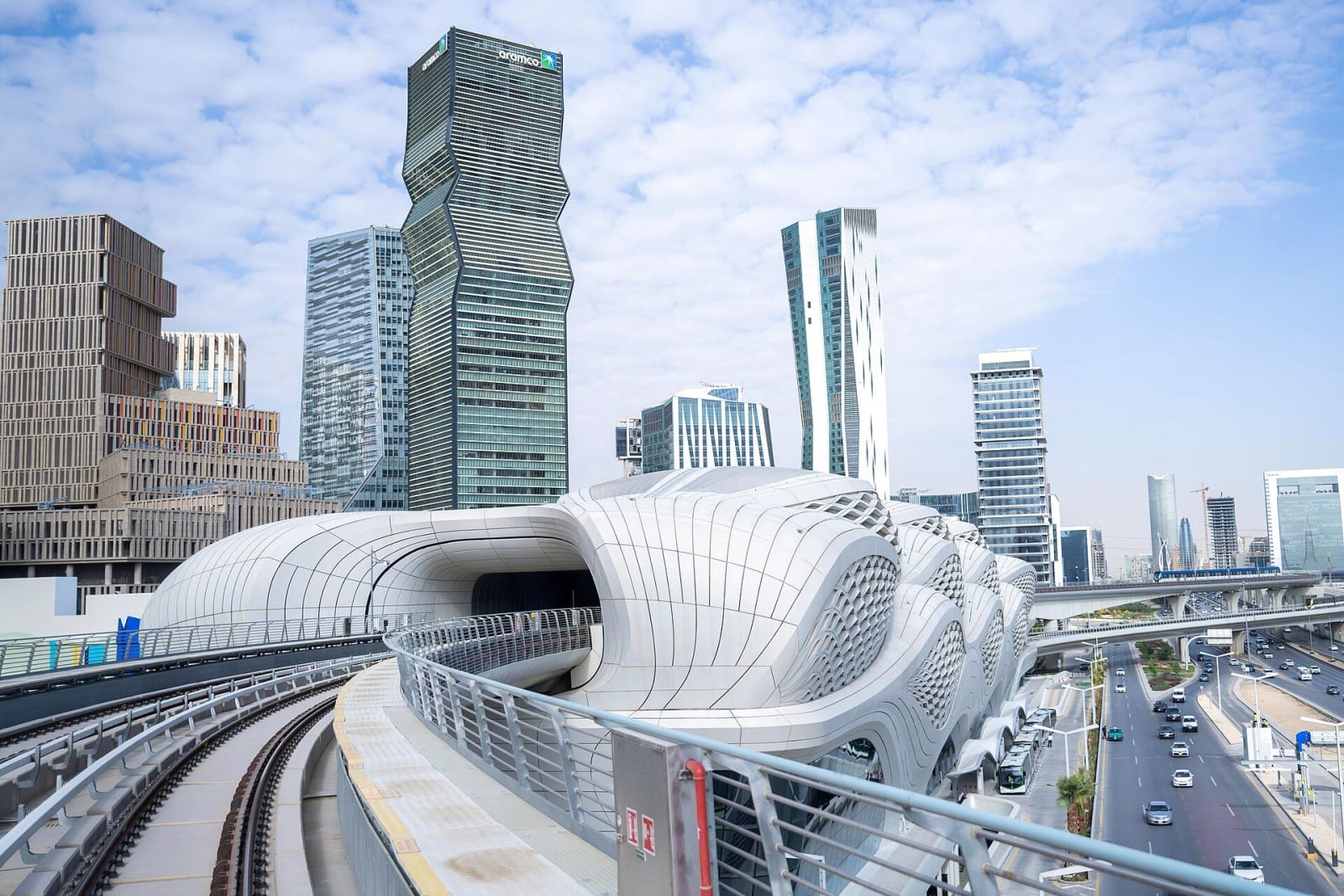
Riyadh built a 176 kilometre metro network with 85 stations across six lines, and most of it opened within a matter of months. For UAE transport operators watching the Gulf's other major metro projects unfold, Riyadh is worth studying closely, not because every Gulf city will follow the exact same path, but because it's the clearest recent example of what happens to ground transport demand once a Gulf city commits fully to a rapid transit network. This article looks at what actually opened, what the early numbers show, and what UAE operators with any Saudi exposure should take from it.
What actually exists in Riyadh today
The Riyadh Metro is owned and operated by the Royal Commission for Riyadh City, and its scale is genuinely large by regional standards: six lines, 85 stations, and 176 kilometres of track, according to tracking by themetrorailguy.com cross checked against individual line records. As of early 2025, five of the six lines were reported operational. The Blue, Yellow, and Purple lines were already running, the Green line opened on 15 December 2024, and the Orange line opened on 5 January 2025. The status of the sixth line, the Red line, was not independently confirmed as part of the research for this article, so treat that specific line's current status as the last known position rather than a certainty about today.
The official opening itself was confirmed through the Saudi Press Agency, a genuine government source, which is worth noting given how much infrastructure reporting in the region relies on secondary press coverage rather than primary government confirmation. Reported ridership figures, which should be read as reported rather than independently re verified here since ridership is a number that moves constantly, put total public transport passengers since launch at 315.6 million, with 189.5 million of those specifically on the metro since 1 December 2024.
Whatever the precise current figure is by the time you're reading this, the direction is unambiguous. A city that had essentially no rapid transit network built one at genuine scale and opened most of it within a few months of each other, and people are using it in real volume.
Why this matters as a case study, not a prediction
It would be a mistake to read Riyadh's experience as proof that every Gulf city, including those in the UAE, will see an identical shift in transport demand once their own metro projects mature. Riyadh's road network, population density, existing public transport baseline, and urban layout are all genuinely different from Dubai's or Abu Dhabi's. A comparison has to respect those differences rather than flatten them.
What Riyadh does demonstrate clearly, though, is the general pattern that recurs whenever a Gulf city builds serious rapid transit capacity from a low starting point: a large number of previously car dependent or informally arranged trips shift toward the new network fast, station areas become genuine commercial and residential draws in their own right, and the transport need that remains for private operators concentrates heavily at the first and last mile, the segment between a station and wherever someone is actually going. This is the same pattern this site has covered in the context of Dubai's own Blue Line expansion, and Riyadh is simply a further along, larger scale version of the same underlying shift.
For a UAE operator with any Saudi market exposure, whether that's a subsidiary, a partner relationship, or even a single corporate client with a Riyadh office, the practical lesson isn't "expect the same numbers here." It's "expect the same category of shift to happen, on whatever timeline your own city's network reaches a comparable scale," and to start planning fleet and route strategy around that shift before it arrives rather than after.
What the first and last mile opportunity actually looks like
Eighty five stations across a city the size of Riyadh means eighty five points where someone finishes a rail journey and still needs to get somewhere specific. Some of those trips end at a home within easy walking distance. A meaningful share of them don't, particularly for corporate staff transport, school transport, and hotel or business travel arrangements where the final destination is a specific office building, campus, or property that isn't necessarily adjacent to a station entrance.
This creates the same kind of feeder route opportunity that's been discussed elsewhere on this site in the context of UAE metro expansion, just at a scale that matches Riyadh's much larger network. A corporate client with staff spread across several residential areas, all served by different stations along the same or connecting lines, is a genuine candidate for a redesigned transport arrangement built around station pickups rather than a single long direct route from each residential area to the office. Whether that redesign actually saves money or improves reliability for any specific client depends entirely on the real numbers for that specific route, not a general assumption in either direction.
What's different about how Riyadh got here
It's worth noting how differently Riyadh reached this point compared to how Gulf metro projects have typically rolled out. Rather than a single line opening first and expanding gradually over many years, Riyadh brought several lines online within a tight window, going from essentially no rapid transit network to a six line, 85 station system in a short span. That compressed rollout matters for how quickly transport demand actually shifts.
A metro network that expands one line at a time gives transport companies years to adjust gradually, route by route, as each new line opens. A network that arrives largely at once compresses that adjustment period dramatically. Businesses serving Riyadh corporate clients that assumed they'd have a long runway to redesign routes around the metro may have found that runway considerably shorter than expected. That's a useful lesson for any UAE operator watching a similar large scale transit expansion approach in their own market: the assumption that change will arrive gradually is not always safe to make.
A concrete example of what this looks like for one client
Take a hypothetical corporate client with a Riyadh office employing staff who live across several different residential districts around the city. Before the metro reached its current scale, a transport provider serving that client had one realistic option: direct point to point routes from each residential cluster to the office, priced and scheduled independently of each other, with all the driver time and vehicle cost that a spread out, low density pickup pattern involves.
With eighty five stations now in place, a meaningful share of those employees likely live within reasonable reach of a station somewhere along their commute. That opens a genuinely different service design: shorter feeder routes from each residential cluster to the nearest convenient station, timed against the metro schedule, with a single shuttle covering the final stretch from the station nearest the office to the office itself. Whether that redesign is actually worth doing for this specific client depends on the real geography, the real headcount at each residential cluster, and the real cost comparison between the two models. It's not automatically better just because a metro line exists nearby. But it's a genuine option now that didn't exist in the same form before the network reached this scale, and an operator serving that client should at least know it needs to be modeled.
What this means for fleet planning, not just routing
The same shift that shows up in route design eventually shows up in what a fleet looks like. A business built primarily around long direct routes with larger vehicles doesn't automatically need the same vehicle mix once feeder style routes become a meaningful share of its work. Shorter, more frequent runs between a residential cluster and a nearby station generally favor smaller vehicles running more often over larger vehicles running less often, the same pattern this site has discussed in the context of Dubai's own metro expansion.
This isn't a reason to make sudden fleet changes based on one city's metro reaching a certain scale. It's a reason to factor Gulf wide rail expansion into the normal, ongoing decisions a transport company already makes about vehicle purchases and lease renewals, so that fleet composition drifts toward what the market actually needs over several years, rather than requiring an abrupt, expensive correction later.
Whether that kind of redesign is worth doing for any specific client is a calculation, not a guess, and it depends on real numbers: current fuel and driver cost per route, current vehicle utilisation, the metro fare itself, and how much coordination overhead a multi leg journey adds compared with a single continuous ride. Some routes will genuinely be better served staying direct. Others will clearly favour a feeder model once that comparison is actually done. Getting it wrong in either direction has a real cost, either wasting money on an inefficient long route or degrading service by forcing a feeder model onto a route where it doesn't fit. This is exactly the kind of route level decision that becomes far easier to make well when a transport company already tracks cost and utilisation by route and by vehicle, the same connected operational data TransLogix keeps in one place, rather than relying on a rough sense of what a route usually costs.
What UAE operators with Saudi exposure should actually do
The practical starting point is straightforward: if your business already serves, or is considering serving, corporate clients with a genuine Riyadh presence, treat the metro's station map as real operational data rather than background context. Understanding which residential areas, business districts, and client locations sit near which stations is directly useful information for structuring a Saudi facing transport proposal, in the same way understanding Dubai's Blue Line station map is useful for a Dubai facing one.
This doesn't require rushing into Saudi market entry on the strength of one metro system. It requires treating Gulf wide metro expansion as a pattern worth tracking across every market you operate in or might expand into, rather than a purely local UAE story. A transport company that understands how Riyadh, Dubai, and eventually other Gulf capitals are each reshaping ground transport demand around their own rail networks is simply better positioned than one tracking only its home market, regardless of which specific cities it currently serves.
Sources
- Saudi Press Agency (spa.gov.sa), official confirmation of Riyadh Metro line openings
- themetrorailguy.com, network scale figures (176 kilometres, 6 lines, 85 stations) cross checked against individual line opening records; ridership figures (315.6 million total public transport passengers since launch, 189.5 million metro passengers since 1 December 2024) presented as reported at the time of research rather than independently re verified, since these are figures that change regularly
Want to see how TransLogix handles this for your fleet?